
Breaking the Silence: A Guide to Suicide Prevention in Immigrant Communities

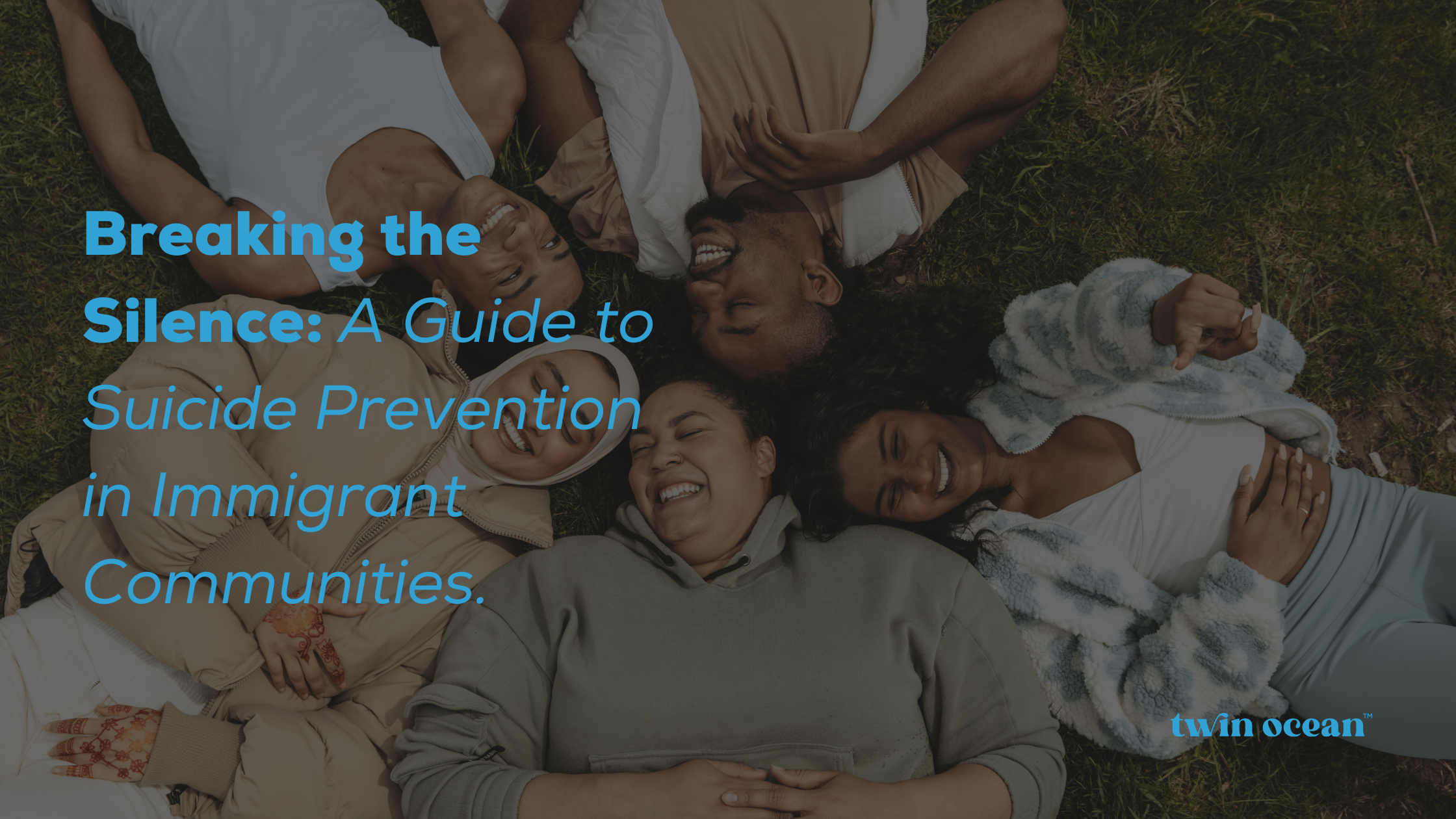
A high-angle view of a diverse group of five smiling friends lying in a circle on the grass with their heads together, sharing a joyful moment. A blue text overlay reads: "Breaking the Silence: A Guide to Suicide Prevention in Immigrant Communities." The twin ocean logo is in the bottom right.
In many immigrant communities, suicide is a topic surrounded by a heavy silence. This guide offers a safe space to learn how to start life-saving conversations, recognize the quiet signs of distress, and find culturally sensitive help. It is a message of hope, reminding us that connection and community care are our most powerful tools.

September is National Suicide Prevention Month. It’s a time to share resources and stories of hope. For many, this topic is difficult. But these conversations are crucial for effective suicide prevention in immigrant communities, where the issue is often surrounded by a cultural silence. This article provides a safe place for learning and a guide to starting life-saving conversations with empathy and courage.

Barriers to Suicide Prevention in Immigrant Communities

Why is it so hard to talk about suicide? For many newcomers, there are unique barriers. A deep cultural stigma can make mental health feel like a taboo topic. There is often an immense pressure to always “be strong” and successful, which can stop people from admitting they are struggling. Some may fear bringing shame to their family. On top of this, finding mental health care that understands your cultural background can be a real challenge. Recognizing these barriers is the first step to breaking them down.

Recognizing the Signs When Words Aren’t Used

Since people might not express their feelings openly, pay attention to changes in their behaviour. These subtle signs might signal a need for help. Watch if a loved one is:

  • Pulling away from friends, family, and social activities.
  • Losing interest in hobbies they once loved.
  • Sleeping too much or too little, or eating more or less than usual.
  • Giving away important personal items.
  • Talking about feeling hopeless or being a burden to others.

How to Gently Start a Conversation

You don’t need to be an expert to help. You just need to be a caring human. If you are worried about someone, find a quiet moment to talk. Your gentle, non-judgmental support can make a huge difference.

You can say something like:

  • “I’ve noticed you seem down lately, and I’m worried about you. How are you, really?”
  • “It sounds like you’re going through a lot. I’m here to listen without judgment whenever you’re ready to talk.”

Where to Find Help

You are not alone, and professional help is available. These resources are free, confidential, and available 24/7.

  • Talk Suicide Canada Hotline: 1-833-456-4566

A Message of Hope and Community

Talking about suicide does not plant the idea in someone’s head. Instead, it can be the first step toward healing. It opens the door for connection and shows the person that they are not a burden, that they are loved. The work of suicide prevention in immigrant communities is a collective responsibility. It is about building a community of care, one conversation at a time. There is always hope, and help is always available.


Share the Post:

Related Posts

A close-up of a person wearing a white hoodie and a sunflower lanyard, representing an article about understanding invisible disabilities. Text overlay reads: "More Than Meets the Eye: A Guide to Understanding Invisible Disabilities." The twin ocean logo is in the bottom right corner.

More Than Meets the Eye: A Guide to Understanding Invisible Disabilities

“But you don’t look sick.” This common phrase misses the reality for millions. Even though Invisible Disability Awareness Week has just passed, the conversation is far from over. This article is a guide to understanding invisible disabilities, from chronic pain to mental health disorders, and how we can offer visible support, especially for immigrants facing cultural stigma.

Read More

Are You an Immigrant in Canada?

Take our “Navigating Life’s Waves as an Immigrant” quiz and see what it says about your journey so far.

Claim Your Early Access Space

Navigating Life’s Waves as an Immigrant Program

Waitlist for Navigating Life's Waves as an Immigrant Program